
REVIEW · SNOWSHOEING TOURS
Snowshoe Trip in the Wilderness
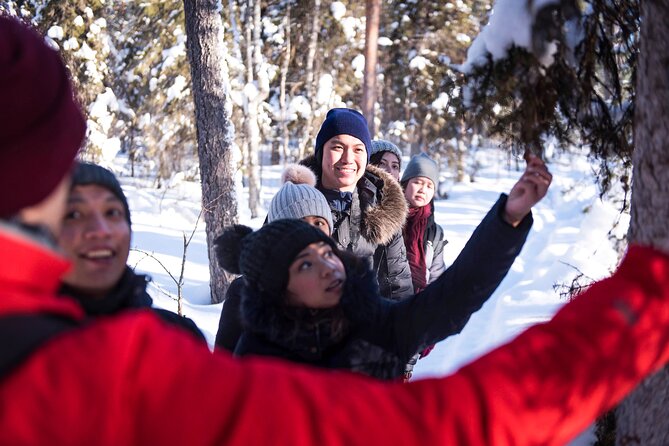
Snowshoes in the Arctic, plus fire-making skills. This Rovaniemi outing mixes snowshoe hiking with guided fire-making and animal-tracking lessons in quiet old forests. You walk far enough into winter to feel the scale of Lapland, but still keep a relaxed pace with a small group and real instruction.
I love that the price includes thermal outerwear and snowshoeing gear, so you are not stuck renting or guessing sizes. I also like the small group size, max 8, which makes it easier to move as one unit and still keep things calm around wildlife.
One drawback to plan for: this experience runs only with good weather, and it is serious cold-country walking, so you need to dress exactly as advised.
Key highlights you will actually care about
- Round-trip transport from Rovaniemi to the trail area, so you do not have to coordinate remote logistics.
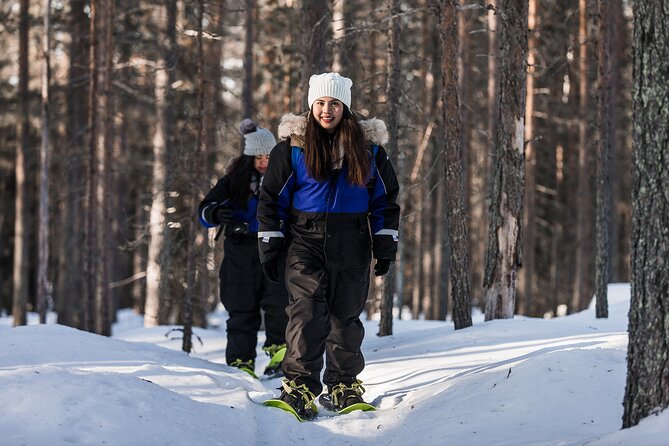
- Thermal clothing and snowshoes provided, a big value boost if you do not already own Arctic gear.
- Guided tracking in snow so you learn to read signs without disturbing animals.
- Fire-making from scratch at a tipi stop, using natural materials and wood (even in very cold conditions).
- Small group on the trail, which keeps the experience quieter, safer, and more personal.
- Hot drinks and campfire snacks included, so the “work” part of the outing ends with a warm reset.
Other snowshoe routes into the forest
- Rovaniemi: Hiking and Snowshoeing Adventure in Lapland
★ 4.4 · 753 reviews - From Rovaniemi: Snowshoeing and Ice Fishing Tour
★ 4.7 · 190 reviews - Rovaniemi: Winter Wilderness Snowshoeing Trip
★ 4.5 · 111 reviews - Night Snowshoeing Adventure under the Northern Lights
★ 4.5 · 50 reviews
Price and what you are really buying in Rovaniemi
At $106.82 per person for about 3.5 hours, this is not the cheapest winter activity in Rovaniemi. But it is also not just a walk with a guide. You are paying for the full package: guided instruction, round-trip transport, winter clothing, and snowshoes, plus a campfire break with coffee or tea and snacks.
If you have ever tried to put together a snow day in Lapland on your own, you know where the costs hide: gear rental, transportation, and the time drain of learning routes and safety basics. This tour compresses all of that into one guided session. In practice, the value lands best for first-timers who want to enjoy the Arctic without turning it into a gear project.
Getting there: Rovakatu 24 meeting point and smooth pickup
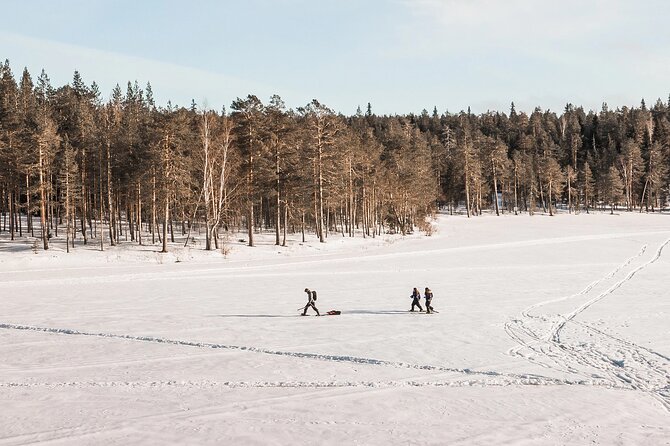
The action starts at Rovakatu 24, 96200 Rovaniemi, Finland. You will meet there and then head out by private transportation to the trail area. If your accommodation is outside the city center, you can also get hotel pick-up and drop-off, which matters in winter, when timing and daylight are tight.
The meeting point being close to public transport is a comfort detail. Even if you are not staying right in the core, you are not fully dependent on taxis or complicated transfers to reach the start.
Once you arrive, the first “real” step is getting fitted and set up with winter clothing and snowshoe gear. That is not just admin. When you are working in cold air, the right fit can mean the difference between a cozy walk and cold-circulation misery.
The drive and the setup: gear matters more than you think
You go from city-to-forest by car, with the guide setting expectations before you step onto snowshoes. When people say this is beginner-friendly, what they usually mean is that the guide helps you get stable quickly and keeps the walking straightforward.
You will receive snowshoes and professional winter clothing. That pairing is key, because snowshoes are only half the story. Cold air and wet snow can sneak into boots and cuffs fast, especially if you are standing still for photo stops. With the provided thermal layer, you can focus on learning the walking rhythm rather than wrestling your outfit.
From the gear break, the tour typically includes a short intro to how to move on snowshoes. It is enough to get you comfortable, not enough to turn it into a training camp. And since the group max is 8, the guide can adjust pace when someone needs a slower cadence.
Other Arctic days within reach of Rovaniemi this winter


The hike through old forests and frozen rivers
Once you are moving, expect a guided route through Arctic nature with sections that often feel like a mix of old forest trails and frozen-water scenery. The big theme is reading the environment without pushing into it.
Your guide leads you to look for wildlife signs and the little details animals leave behind. In snow, that means animal tracks and patterns in the steps left behind. The value here is not just spotting something interesting. The value is learning how to notice what the forest is already telling you, while keeping distance so you do not disturb animals.
The route is designed for a relaxing winter walk, not a summit push. Still, do not expect it to feel like an easy stroll. Snowshoeing uses different muscles, and it can turn into a satisfying cardio workout, especially on gentle up-and-down stretches. The good part is that the guide can manage speed for the whole group.
One practical note I am glad you can act on: snow can be deep in spots. Some people find they sink farther than expected, so wearing waterproof footwear and winter pants that fit well at the edges can help keep snow out of your socks and boots.
Wildlife etiquette: how to look without changing the forest
This is where a good guide earns their pay. You are not just walking in “pretty nature.” You are walking in a habitat in winter, when animals conserve energy and move carefully. With a small group, you have fewer footsteps and fewer disturbances.
Your guide also encourages respectful behavior while you track animals by signs. That means you learn what to observe and how to behave around fresh tracks. The result is an experience that feels authentic, not intrusive. You get the satisfaction of understanding the environment, without acting like you own it.
The tipi stop: campfire snack and learning fire from scratch
The warmest part of the tour happens when you reach a tipi-style shelter for a campfire break. This is not a casual “watch someone else do it” moment. You learn the process of making fire from scratch using natural materials you find in the surrounding nature, with wood chopped on-site by the guide.
This part is especially valuable because it is practical. In real Arctic cold, the difference between surviving warmth and struggling for it can be a few key steps and the right materials. You are taught how to approach fire-making methodically, even in severe cold conditions, with the tour description noting it can be done in conditions as cold as -30°C.
And yes, you get to eat. The included snack break typically includes a warm campfire meal such as sausages, along with hot drinks like coffee and/or tea plus campfire snacks. It is a simple meal, but it hits the spot because you have been moving in the cold and then you get the warmth of real fire, not a thermos fantasy.
Photo time: capturing Lapland without rushing
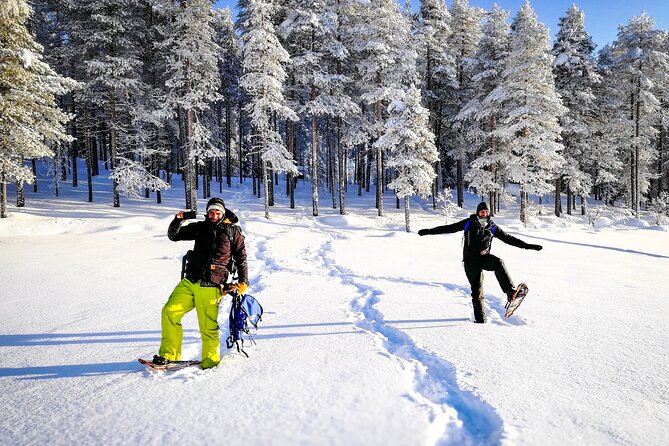
If you like photos, this tour gives you good opportunities. You get forest views with fresh snow on trees, plus the sort of wide, wintry scenes you tend to find around a tipi stop. Because the group is small, you are not constantly stepping around dozens of people trying to shoot the same angle.
The guide also tends to click photos for you, and that matters when your hands are busy keeping gloves on and staying balanced. Just do not forget that your camera batteries can drain faster in cold weather. Keep extras warm in a pocket close to your body if you have them.
How long is it, and what pacing feels like
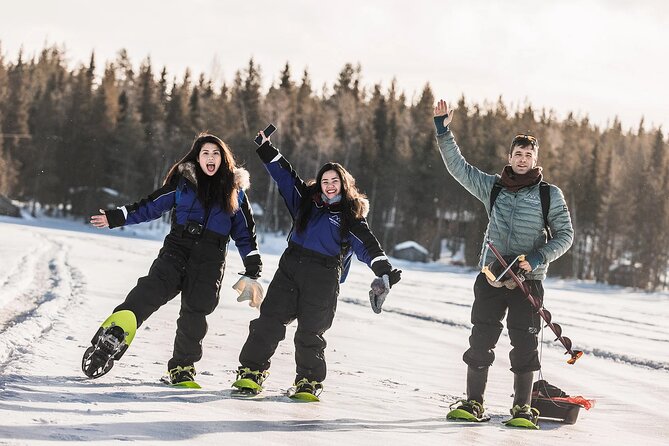
The duration is about 3 hours 30 minutes. That time works because it includes transport, gear setup, walking, and the campfire stop. In other words, you are not just paying for time on a trail. You are getting instruction plus a warming break built into the schedule.
Pacing tends to be beginner-friendly, with the guide managing speed for the group. People often describe the hike as doable even for kids, but I would treat that as a “possible” rather than a guarantee. Snowshoeing is still a winter activity. If you have mobility limits or get winded easily, bring that up before you start, and the guide should help you find a comfortable pace.
What to wear: keep your feet dry and your body warm
Even though the tour includes winter clothing and snowshoes, your layers still matter. Here is how I would pack your thinking:
- Wear warm base layers under the provided outerwear.
- Use waterproof footwear. Some snow can be deep enough that you sink more than you expect.
- Choose winter pants that reduce gaps at the boot line. If snow gets inside your pants, it can turn into a cold problem fast.
- Bring camera gloves or thinner gloves if you need to handle your phone or camera.
If you want one simple rule, it is this: keep snow out of your boots and keep wind off your core. With that done, the provided gear should feel like a huge advantage rather than just something to wear.
Who should book this snowshoe and fire-making tour
This is a great fit if:
- You are visiting Rovaniemi for a short time and want a structured Arctic experience without planning every detail.
- You want to learn more than just “how to walk on snow,” including reading animal signs and building a fire.
- You enjoy small-group guiding, where you can ask questions and actually hear the answers.
It is also a strong choice if you do not already own snowshoes or proper thermal layers. Since those are included, you avoid extra rental costs and reduce the stress of shopping for gear in a country where winter gear is everywhere and sizes can be a guessing game.
A few guide details that make the experience feel personal
Guides help shape the energy of the walk and the quality of the lessons. In recent outings for this experience, you may encounter guides such as Lola, Anna/Ana, Belencita, Tyler, or Maxime, and the common thread is active, hands-on teaching. People also highlight moments like the guide adjusting to each person’s speed, showing how to set up an open fire safely, and making photo moments easier.
That matters because snowshoeing is one of those activities where confidence grows fast with the right instruction. A friendly, energetic guide also helps you enjoy the quiet moments, not just survive the cold ones.
Should you book this tour?
If you want an Arctic winter experience that feels real, not rushed, and you like practical skills, I would book it. The strongest reason is the bundle: transport, gear, guidance, and warmth are all included in one 3.5-hour outing. You come away with the kind of confidence you cannot fake, like knowing how to walk on snowshoes and how fire-making works in cold conditions.
I would think twice only if you hate cold-weather activities or you are planning around very unpredictable conditions. This tour requires good weather, and you will be outside long enough to feel the Arctic air. If you are okay with that, this one is a solid way to see Lapland’s winter world while learning useful skills at the same time.
FAQ
How long is the snowshoe trip?
The duration is approximately 3 hours 30 minutes.
Where does the tour start in Rovaniemi?
The tour starts at Rovakatu 24, 96200 Rovaniemi, Finland. It ends back at the meeting point.
What is included with the tour price?
You get snacks (including a campfire snack), professional winter clothing, coffee and/or tea, snowshoes, and private transportation. All fees and taxes are included as well.
Do I need to bring snowshoes or winter clothing?
No. Snowshoes and professional winter clothing are included.
Is lunch included?
No, lunch is not included.
Do I need matches or a lighter for the fire-making?
No. The guide will chop wood and show you how to make fire using natural materials found in the nature around you.
How big is the group?
The tour/activity has a maximum of 8 travelers.
Is the tour offered in English?
Yes. The tour is offered in English.
What happens if the weather is poor?
This experience requires good weather. If it is canceled due to poor weather, you will be offered a different date or a full refund.
More Tour Reviews in Rovaniemi
- Rovaniemi: Northern Lights Tour with Guaranteed Sightings★ 4.6 · 3,836 reviews
- Northern Lights Rovaniemi: Guaranteed Viewing & Unlimited Mileage★ 5.0 · 2,321 reviews
- Rovaniemi: Lapland Northern Lights Tour with BBQ★ 4.0 · 1,569 reviews
- Rovaniemi: Reindeer, Huskies & Santa Claus Village★ 4.5 · 1,543 reviews
- Rovaniemi: Small-Group Northern Lights Wilderness Tour★ 4.3 · 1,515 reviews
More Arctic Wilderness Tours in Rovaniemi
- Rovaniemi: Small-Group Northern Lights Wilderness Tour★ 4.3 · 1,515 reviews
- Rovaniemi: Guided Wilderness Snowmobile Ride★ 4.7 · 741 reviews
- Rovaniemi: Guided Wilderness Snowmobile Safari & Barbeque★ 4.8 · 622 reviews
- Northern Lights Wilderness Small-Group Tour from Rovaniemi★ 4.5 · 290 reviews
- Rovaniemi: Snowmobile Safari into the Wilderness★ 4.7 · 254 reviews
Deeper Into the Forest on Foot
- Rovaniemi: Hiking and Snowshoeing Adventure in Lapland★ 4.4 · 753 reviews
- From Rovaniemi: Snowshoeing and Ice Fishing Tour★ 4.7 · 190 reviews
- Rovaniemi: Winter Wilderness Snowshoeing Trip★ 4.5 · 111 reviews
- Night Snowshoeing Adventure under the Northern Lights★ 4.5 · 50 reviews
- Snowshoeing and Ice Fishing Tour★ 4.5 · 35 reviews
Newest on the site from Rovaniemi and the Lapland circuit


Snowshoeing Tours, one night after another.
 ★ 4.4Hiking and Snowshoeing Adventure in LaplandFrom $104753 reviews
 ★ 4.7Snowshoeing and Ice Fishing TourFrom $135190 reviews
 ★ 4.8Levi: Pallas-Yllästunturi National Park Snowshoeing TourFrom $187112 reviews
 ★ 4.5Winter Wilderness Snowshoeing TripFrom $104111 reviews
 ★ 4.8Saariselkä: Snowshoeing Tour in Urho Kekkonen National ParkFrom $8891 reviews
 ★ 4.7Levi: Snowshoe Adventure in the WildernessFrom $10584 reviews
 ★ 4.6Levi: Scenic Levi Snowshoe TripFrom $10483 reviews
 ★ 5.0Arctic Reindeer Farm Experience with Snowshoeing in the WildFrom $20074 reviews
Lists this one sits on